

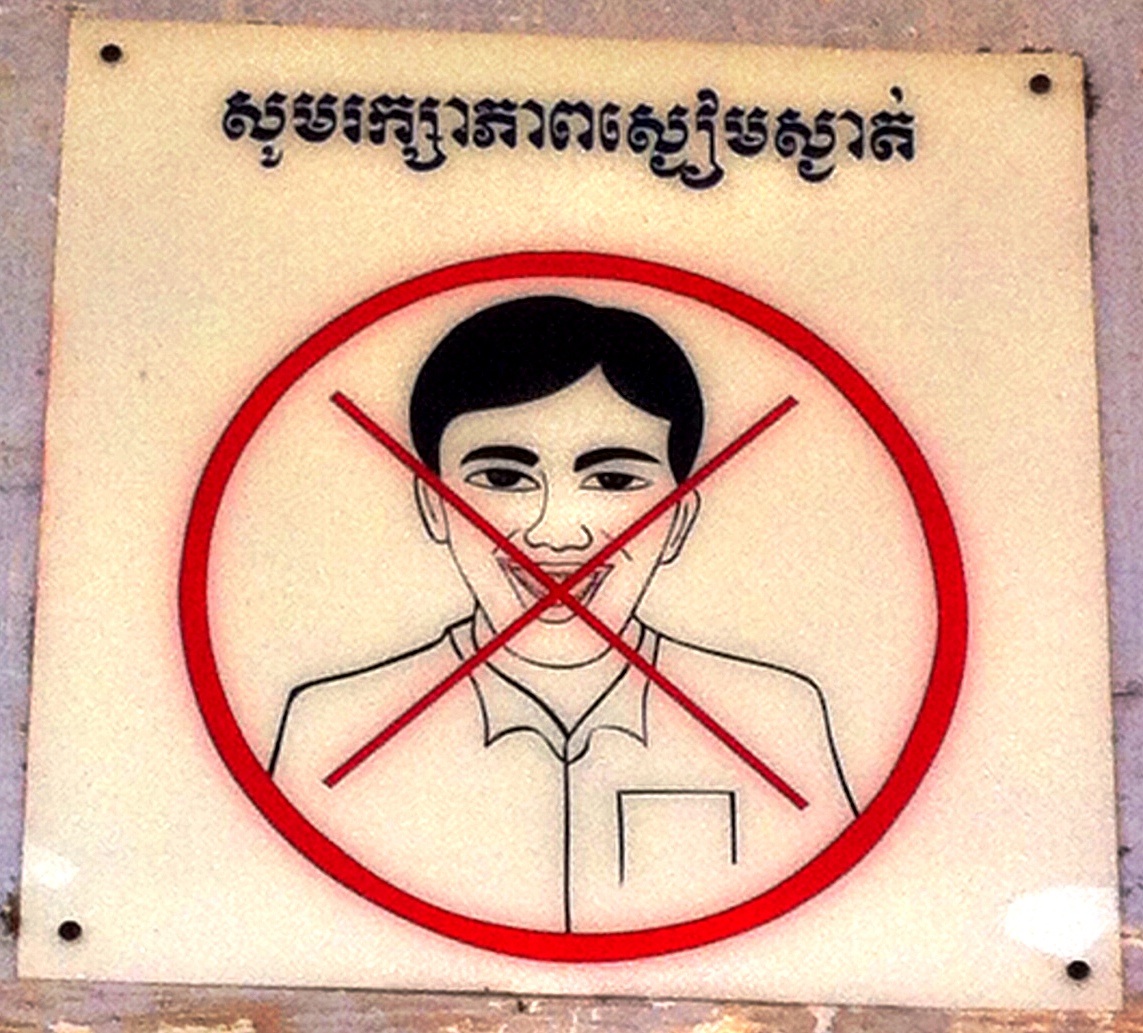
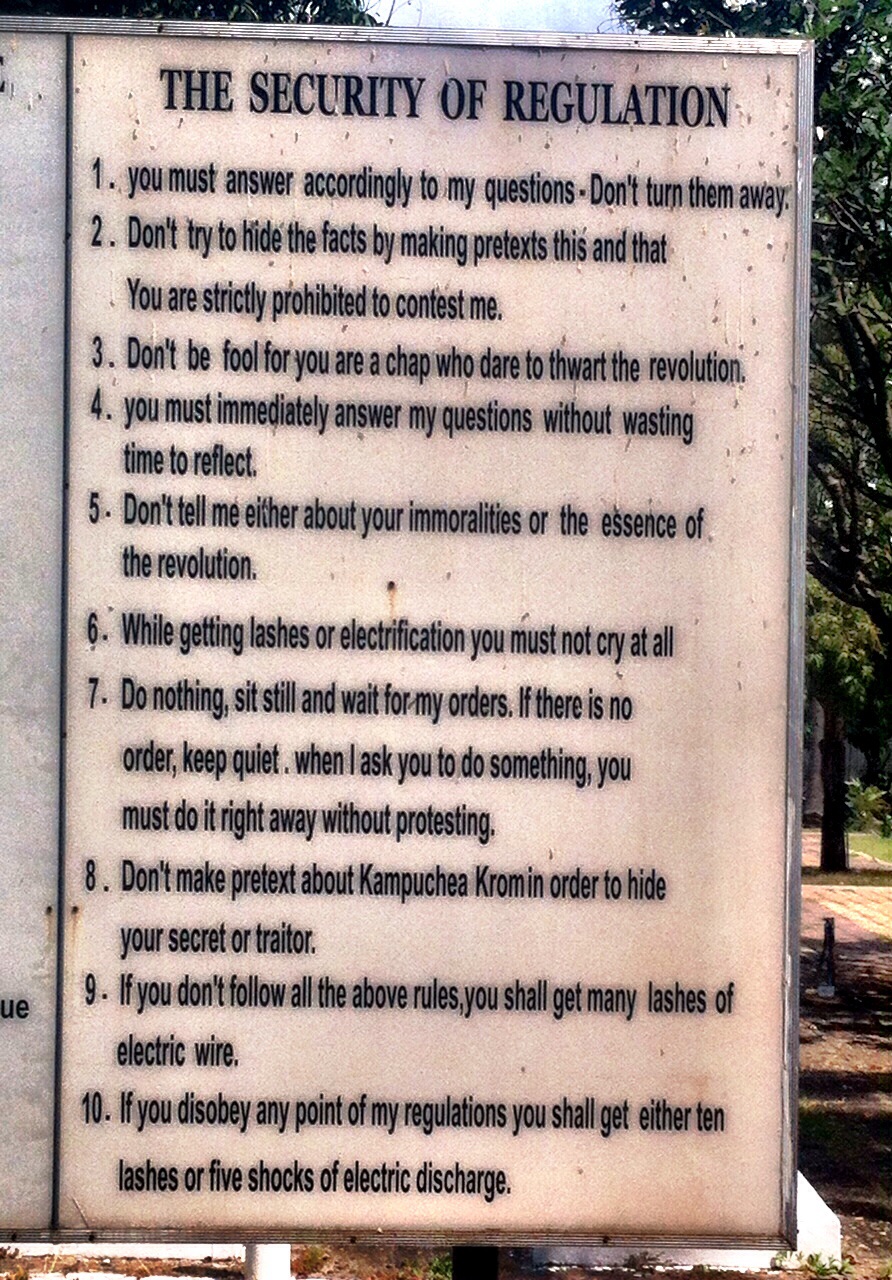
 First we thought it was another funny and curious sign to take a picture of,
later on we found out there was nothing to laugh about ……
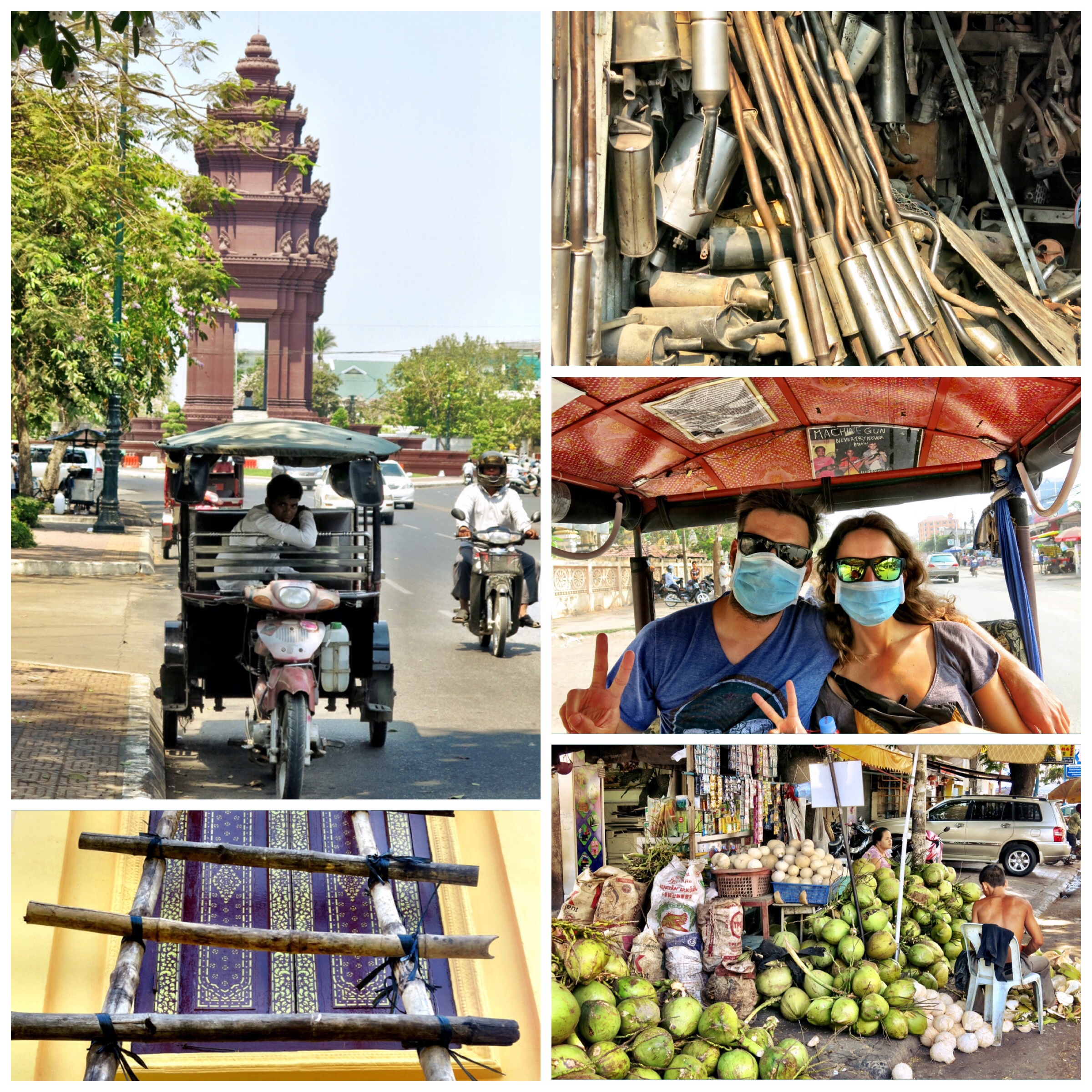 As a city, Phnom Penh is quite bland. In fact, we were not very impressed or surprised by anything in particular except for the people, who were very friendly and polite. You can have a decent walk through the streets if you don’t have high expectations. However, amongst all the capital cites that we have been so far, Phnom Penh was maybe the least attractive.In addition, Phnom Penh is a city of contrasts. Hosting one of the most corrupt governments in the world (according to different sources), it is ironically one of the cities in the world with the most NGOs. It also has a fancy avenue where all the embassies are located including the EU delegation, which is not far from the red light district, a place in the very center of the city with a terrible reputation.
Phnom Penh also mirrors Cambodia’s tragic recent history. Our first physical approach to such sadness was visiting the Toul Sleng Genocide Museum, a school that under the Khmer Rouge regime of the 1970s was turned into a prision. There, people were brutally tortured before being sent to the Killing Fields, a place that we also visited, where thousands of people spent the very last agonizing moments of their lives. At the killing fields people were murdered with knives, axes, bamboo sticks, and any imaginable hand weapon that did not include bullets; these were considered too expensive and a waste of money. Finally they were buried in mass graves, which were enormous ditches dug into the ground.
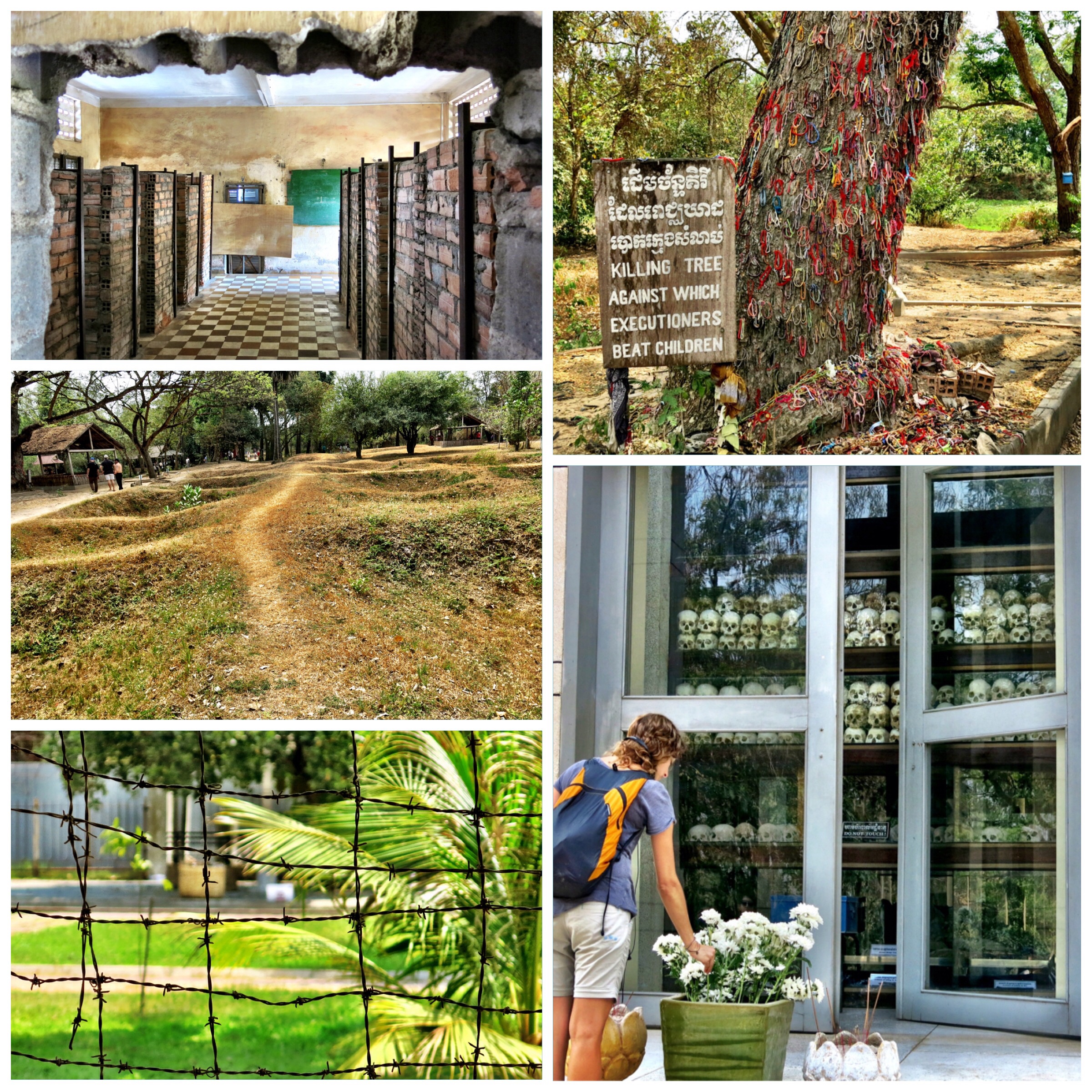
 The target could be anyone, not just the opposition to the regime. Having lived in the city, wearing glasses, having good manners, or any other sign of education would lead to a death sentence. This way, based upon an army made out of brainwashed children, the Khmer Rouge managed to turn people into slaves, obligating them to forced labor. Aside the thousands murdered in the killing fields, many other people died of starvation, malaria, and dehydration working in the fields. In total, almost two thirds of the population lost their life because of the sickness of this psycho regime.*
Trying to recover from the deep sadness that these two places left on us, we found Quita Penas Restaurant (“Sadness Reliever”). The name itself seemed to indicate that they had what we were looking for. It was a very nice place run by Joaquin Campos, a Spanish cook that was not only a reputated chef but, as he pointed out, a passionate writer. Once we finished the delicious dishes he prepared, we had a very interesting chat, where he was very critical with Cambodia’s politicians as well as the NGOs. He really seemed to know what he was talking about. **
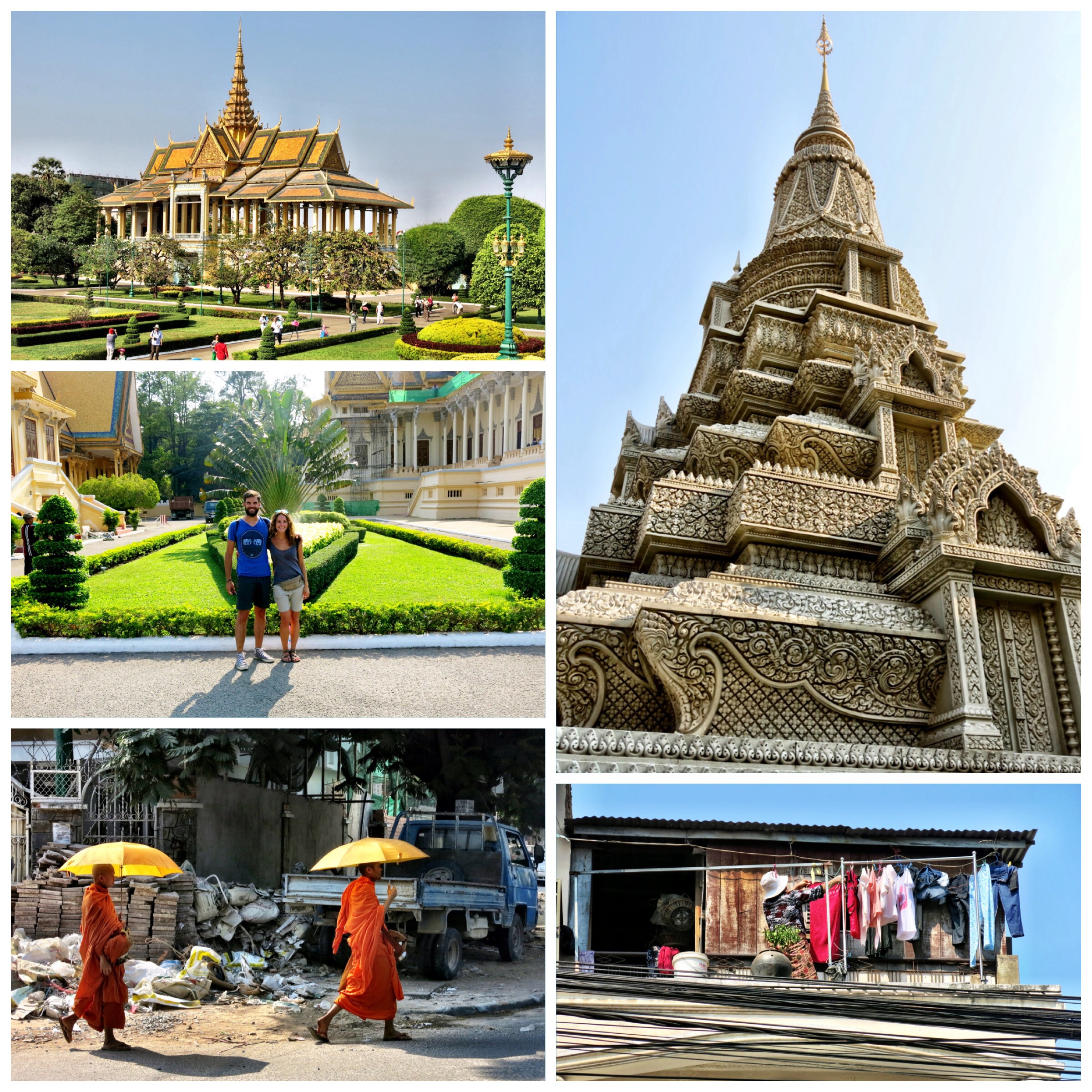 As a final stop before leaving, we visited the Royal Palace which is located in the same part of town as the embassies. It was beautiful, although the weather was scorching hot!
The next morning, a bus took us to our next destination: Siem Reap.
* There is a famous novel on Cambodia’s history under the Khmer Rouge regime written by a survivor of it that brought Martina to tears. “First They Killed My Father,” by Loung Ong.
** Just for the most curious, Joaquin has a website with interesting blogs about these and other issues. http://www.fronterad.com http://blogs.opinionmalaga.com/chinitis/
 the perfect crossroad